
Music as Memory and Protest
The Glass RoomThis flow traces music’s role as domestic pleasure, public warning, private grief, and a fragile connection across exile.
increasing Bearing strength in each event
 decreasing
Bearing strength in each eventdecreasingMusic in the New Home
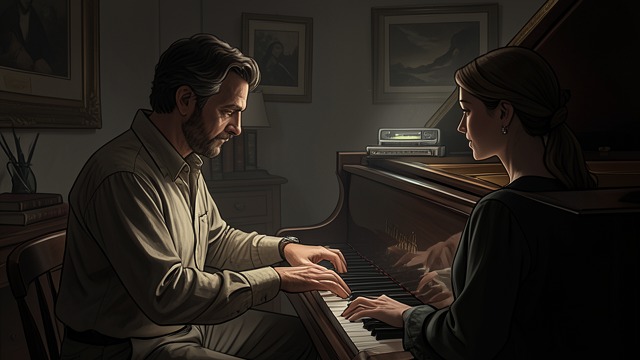
The Glass Room as a Concert Space
A public performance
Miroslav Němec plays Janáček, followed by Vítězslava Kaprálová performing Ravel’s “Ondine.” The music makes the new house feel hospitable to artistic experiment and a younger generation’s promise.
The piano’s sound gives the abstract interior a social and emotional center.
A memory begins
The performance becomes one of the scenes that Liesel later carries into exile. Music links a specific gathering to a lost home.
A Charity Recital
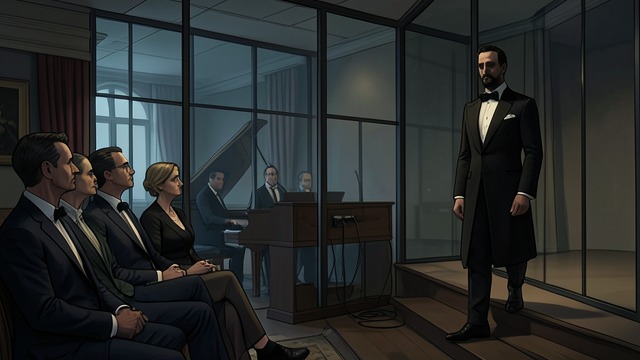
Music Meets Civic Duty
The performance
Němec performs for a charity audience in the Glass Room. Viktor introduces the recital with a warning that oppression across Europe may eventually reach their own country.
The concert turns cultural life into a setting for political speech.
Beauty and indifference
The architecture remains calm as the political danger grows. Music can gather listeners and direct attention, but it cannot stop the coming crisis.
A National Protest in Music

Concert as Defiance
Czech music performed
Hana attends a concert where Czech repertoire carries a spirit of national protest. Miroslav Němec announces the absence of Jewish composer Pavel Haas, making persecution audible through omission.
The audience applauds as a form of collective feeling.
The limits of symbolic resistance
Hana calls the protest pathetic beside the force of occupation. Music expresses dissent, but its beauty cannot substitute for political protection.
Stahl Plays the Kreutzer Sonata
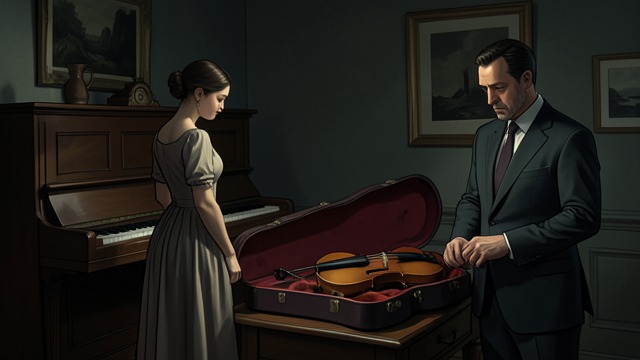
A Lost Partnership in Sound
The piano returns
Hana asks Werner Stahl to play in the former family home. He chooses music he once played with Hedda, and hears the absent violin part as the presence of his lost wife.
The performance brings grief into a space used for Nazi research.
Art cannot absolve
Music briefly creates intimacy between Hana and Stahl, but it does not change the harm he serves. The scene shows how beauty and complicity can occupy the same person.
A Dance for the Dead
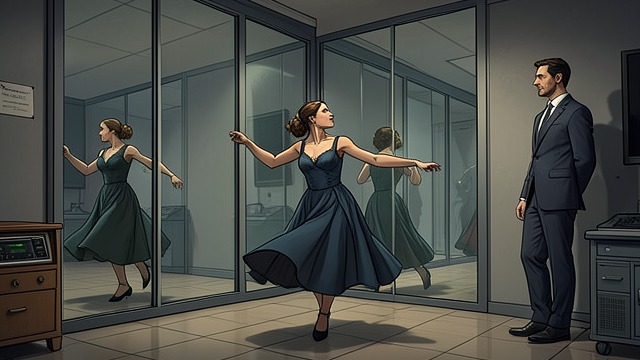
Janáček as Farewell
A final performance
Zdenka dances to Janáček after discovering Tomáš’s affair. The music gives her a form for grief that she cannot express through ordinary conversation.
She dances for the Landauers, for Hana’s lost husband, and for her own love that has become memory.
A changed meaning
The Glass Room no longer serves simply as Tomáš’s refuge or Zdenka’s romantic stage. It becomes a place where the past is acknowledged and a relationship is mourned.
At the housewarming
During the refugee crisis
During the occupation years
During Hana and Stahl’s wartime encounter
After Zdenka learns of Tomáš and Eve
